The Death Penalty: The True Evil

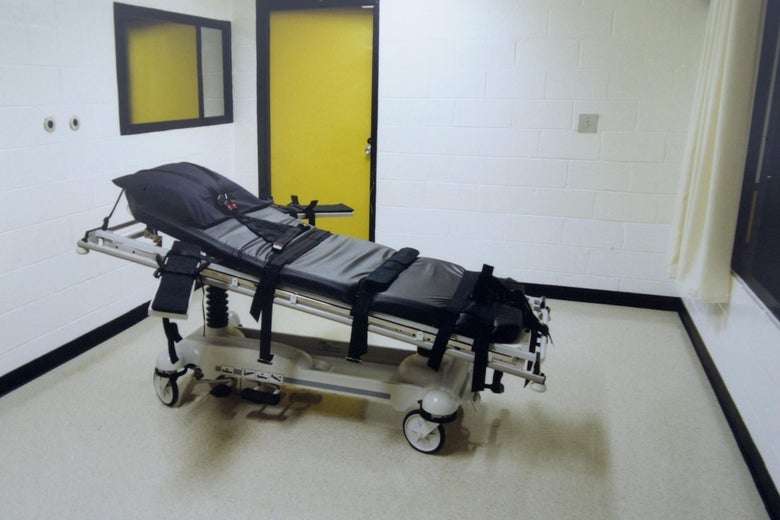
Photo by Miguel Á. Padriñán from Pexels

Back in my junior year of high school, I was always intrigued by the concept of the death penalty. In fact, I thought it was necessary to have it.

There are people in this world who do such evil and heinous crimes that I believed death was a fair punishment. But after doing my research, I had a sudden change of tone.
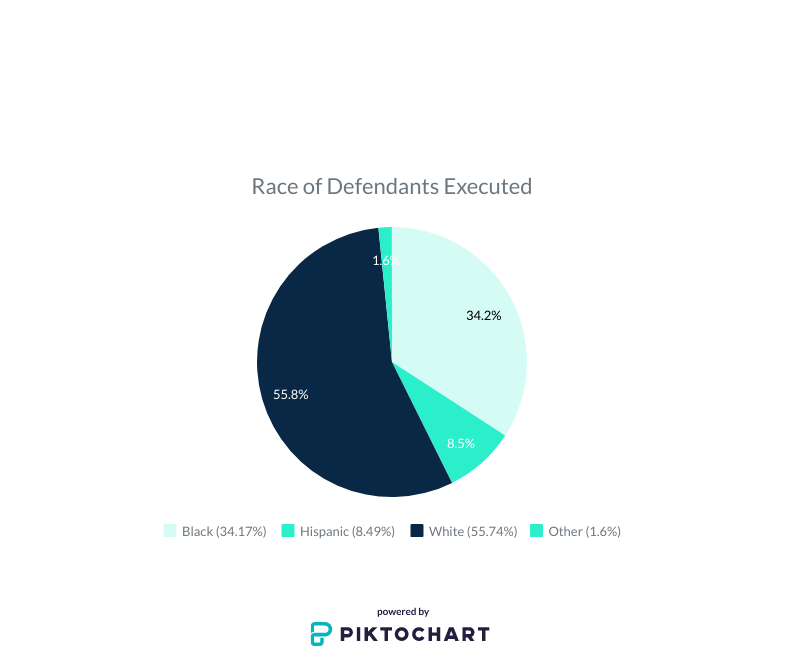
With that a number of defendants range in race in execution.

While there have been some states that have removed the death penalty, others are still still using it to this day. A recent survey among law officers in North Carolina found that the death penalty is used in law enforcement while acknowledging that it is a flawed system.

We will tackle a few of the most common debates on if we have the right to take the life of another, aren’t we just as bad as the people we kill and does the death penalty bring closure to the families of the victims?

MORALLY WRong:

According to the Death Penalty Information Center, only 2% of counties in the U.S. have been responsible for a majority of cases leading to executions since 1976.

In more clear terms, the death penalty has been around for centuries that remains as part of the criminal justice system.

The idea of an “eye for an eye” may sound justifiable for some who want immediate justice, but in actuality, taking the life of another person won’t solve anything, and we in turn are just as bad as the person who has committed a crime.

In Junno Esteves Death Penalty Foster Revenge, Not Justice, Pope Says were in an interview with Pope Francis, claims that the death penalty is not necessary and doesn’t bring justice to anyone. As Pope Francis states, “No matter how serious the crime, to kill a convicted person is ‘an offense to the inviolability of life and the dignity of the human.'”

He views that the death penalty is also just as bad as a crime that a person might have committed as we are taking a person’s life. While we are so involved with getting revenge, we forget that the inmates are also people that we are taking their lives away.

In George Orwell’s story, The Hanging tells the story of a security guard sending a man to his death while coming to the realization that he’s human too. He quotes, “He and we were a party of men walking together, seeing, hearing, feeling, understanding the same world, and in two minutes with a sudden snap, one of us would be gone- one mindless, one wordless.”

The realization of sending someone to their death is a surreal experience, especially when realizing this person is just like us. 

While we still have the death penalty available in some states and execute in a variety of ways, doesn’t that make us seem just as bad as the person we are killing?

The Risk of Taking an Innocent Life:

This had been a significant issue when it comes to the topic of the death penalty—the risk of taking an innocent life.

According to a post by The Guardian, at least 4.1% of all defendants sentenced to death in the US in the modern era are innocent, according to the first significant study to attempt to calculate how often states get it wrong in their wielding of the ultimate punishment.

In Tom Jackman’s article, The Problem of Innocence in Death Penalty Cases discusses on how Marcellus Williams was almost sentenced to death until new evidence proves that he was not guilty of his crimes. He quotes, “The jury that convicted Williams never heard about the DNA evidence, and it is hard to imagine that if we tried today that he would get a death sentence, given the new doubts about guilt.”

Williams was charged for the murder of Lisha Gayle at her home in 1998. A knife found at the crime scene that “allegedly” was linked to William. However, upon further examination, the DNA of another unidentified man was found on the weapon.

If this new evidence didn’t come out beforehand, he would have been killed for a murder he didn’t commit.

Sadly, this is still a frequent scenario that happens today.
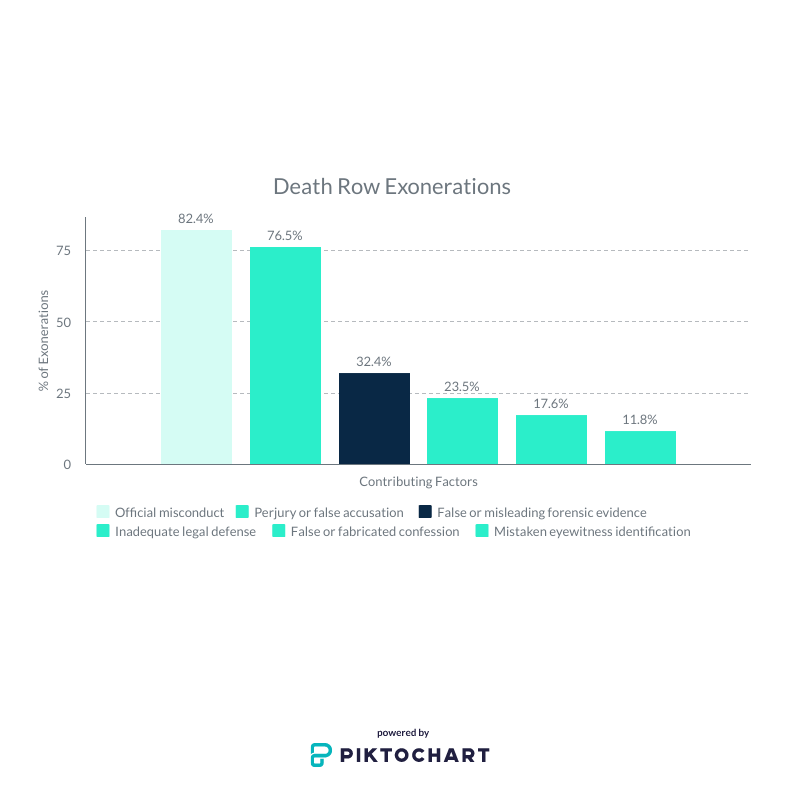
Original graphic on Death Row Exonerations

Williams was one of the lucky few to be exonerated. Others weren’t so lucky. Some get executed while remaining innocent.

The awareness of new evidence that proves a person is innocent has not stopped from trying to execute people based on flimsy evidence that plays a crucial role in how they perform the sentence. We’ve become so involved with seeking justice for someone; it’s like we don’t care about what the outcome is.

Closure:

Probably one of the most common debates revolving around this question. Does the death penalty bring closure to families?

In some cases, there are a majority of families who believe that the death penalty is necessary and does bring closure for them in some way.

The idea of finally seeing someone getting the punishment they deserve for the killing of a loved one can be therapeutic for some people

In Alan Blinder and Manny Fernandez’s article Bearing Witness to Execution: Last Breaths and Lasting Impressions interviewing families of murder victims who’ve witnessed watching an execution.

In one interview with Charles E. Coulson, he described how the execution was carried out and his thoughts about it, which he stated, “These were two evil people, and their executions did not bother me at all. It’s what I thought they deserved”. He says that they deserved to be killed and don’t feel bad that it happened.

It’s most common that when families are a witness to an execution, it is viewed as justifiable for the suffering that the victims and their families have endured. Then there are the few who say that it doesn’t do anything for them.

There are instances where the death penalty isn’t viewed as justifiable for anyone and doesn’t bring closure to any side. In an article from Psychology Today called Death Penalty May Not Bring Peace to Victims’ Families discussing one how the death penalty might not bring closure to some families to an extent.

One quote states, “Taking a life doesn’t fill that void, but it’s generally not until after execution that families realize this.” It doesn’t work for all families who go through the experience of watching someone die right in front of them. After the execution is done they would still develop an empty feeling that can never be filled again.

 Research conducted by Scott Vollum at the University of Minnesota showed that executing perpetrators increased family members’ feelings of emptiness because it didn’t bring back their loved ones.

A mere 2.5 percent of victims’ family members and friends reported closure following an execution. And one in five said the execution failed to help them heal at all.

If it’s only 2.5 percent of people that are healed, what about the rest of the remaining 97.5 percent? Who is this actually helping?

The death penalty has been around for a long time, but it still remains an important debate to discuss. While it does bring closure to families who want justice for the murder of a loved one, it can even leave an empty feeling that can never be replaced.

If you’d like to learn more about the criminal justice realm and get updated for the next blog post, follow Down Right Criminal on Twitter!

Women in Law: The Joy Spriggs Interview

Photo by CQF-Avocat from Pexels

Funny enough, at one point, I did want to become a lawyer when I was younger. But as you can see, I’ve changed my mind by pursuing writing instead. My interest in law never left me, as I’ve dedicated my blog to it by sharing topics about it.

For this interview, I focused on women in law and chose New Jersey attorney Joy Spriggs. She has been working in her profession for seven years and runs her own law office in her hometown in Plainfield, who I’ve had the pleasure of knowing since I was 12 years old.

Not only did I learn a lot about her as a person but also the challenges she endured to get to where she is today.

Original photo of Joy Spriggs

What kind of lawyer are you/ what does your job involve?

“I have a practice that due with municipal court, real-estate, will estate. Representing people in municipal court, also various suspense that are committed, non-indictable type of expensive and representing people within a purchase-sale of the residential, commercial, liability transactions.”

“That involves reviewing contracts, negotiating terms. Processing them when they make the real-estate transaction purchase, and we’re preparing wills for people as well”.

What sparked your interest in doing this profession?

“First, I wanted to make a career that involved helping people, and that’s what I’ve accomplished that so it’s well-worth having taken a living for myself.”

Did anyone/anything inspire you?

“Interestingly, one of the people that inspired me from afar was a restauranteur named Barbra Smith. She was someone that paid attention to detail, had a certain style. She was probably one of my bigger inspirations. Despite her not being an attorney, she was an African American woman who created a legacy for herself, and that’s how I saw her.”

What’s the process of becoming one like, and was it challenging? 

“It was challenging. After graduating with a degree in finance in Jersey City, I decided that I wanted to go to law school at Ohio Northern University.”

“Originally, I wanted to do that when I was younger, but I changed my mind to go to a general school, then changed my mind and decided to go to law school.”

“Law school was tough. It required a lot of time, dedication, concentration, perseverance. So there were challenging times when you were like starting to doubt yourself, but overall it worked out after being an undergraduate from a four-year college then law school, full time for three years. After law school, I ended up passing the bar. It was challenging but paid off in the end”.

Have you’ve ever experienced any sexism or racism personally dealing with your profession? 

“Just recently, I’ve filled a suit against the local mayor of the town because at one point he had selected someone to a position that I have had for fifteen years as a public defender. He replaced me with a male who was less qualified, wasn’t a resident of the town and I wound up filing a lawsuit against him, which I was successful in the lawsuit. It was very new and very different for me as a person in the profession “.

The lawsuit was covered recently by My Central Jersey on March 23, 2020. A news site dedicated to people living in the central New Jersey area, which is a site I’m very familiar with. To learn more details about the situation click the link provided.

According to a recent survey of 2,827 lawyers, female lawyers, and especially women of color, are more likely to be interrupted, mistaken for non-lawyers, and to have less access to prime job assignments.

The American Bar Association’s Commission on Women in the Profession and the Minority Corporate Counsel Association

“Racism throughout my seven-year, unfortunately as a black woman, I experienced it when going to court despite the fact that I was in a suit and caring a briefcase, sometimes they thought I was the defendant as opposed to the lawyer. That’s something that has been ongoing for a while, and it’s really sad, it happens with everyone”.

“You can’t change people, but you can change situations from time to time.”

What’s it like having your own law office?

“It’s good. I like it and it’s a blessing that comes with it. I worked a lot, but it feels good that having my own office allowed me to balance what I want to balance. I could always make the times that are important to me, which is my family.”

“Sometimes, there are late nights but I manage things by working on my own time to have a balance between work and family.”

How do you manage to balance both work and personal relationships?

“Again, with the ability to have my own office. When most attorneys when start out and start doing this for years, sometimes to 60, 70, 80 hours a week.”

“For me, it was nowhere near that I work a nine-to-five schedule, maybe nine to six you know in between. It’s been this because when things would go on in school, I would make sure that I would bring them in with me. I’d made sure that it was a priority.”

“That’s one thing I’m extremely thankful for with being able to be self-employed and make that decision”.

Any advice for future women wanting to pursue a career in law?

“Absolutely! For any young person wanting to pursue a career in law, I would definitely suggest that they try to align themselves with someone that’s currently practicing. If allowed, try your best to shadow, do an internship by seeking them out”.

“It’s a little bit of a sacrifice because most internships, they’re unpaid, but at least they get a chance to get in and have that experience. It doesn’t have to be the summer. It can be in between semesters for a school that would definitely help for just one: get the exposure and two: for them to know if that’s what they really want to do”.

“You sometimes don’t know until you’re in the full trenches, but being in and around people who are in the profession will help them know what it’s like”.

If you would like to stay updated with an up incoming blog post, or want to learn new things in the criminal justice system. Follow Down Right Criminal on Twitter @TheDRCblog!

She Knows Her Rights: Women in Mass Incarceration

Photo by Juan Pablo Serrano Arenas from Pexels

If you remember the story of Cyntoia Brown, she was serving a 15-year sentence for the murder and robbery of Johnny Michael Allen. Allen had picked her up from human trafficking and paid $150 to engage in sexual activity with Brown.

Brown, only 16-years-old when convicted of this crime and trialed as an adult in the state of Tennessee.

With big named celebrities such as RihannaDrakeLeBron James, and Kim Kardashian West, to name a few, helped spread awareness of the unfair sentencing Brown had, and the endless amount of support finally caught attention caught up with law officials.

Eventually, she was able to receive clemency by the state governor Bill Haslam. In 2019, she was released, marriage and advocating for women who have also experienced the same injustice as she did years back.

Rarely we ever hear about the women who are in mass incarceration. We only the stories of what they were convicted of, but not the full story that happened.

I remembered hearing about this story on Facebook and was completely surprised by the fact that she 16 and still trialed her and gave her sentencing. How many other women are like Brown right now?

Surprisingly, a lot.

The United States is one of the top incarcerators of women in the world. A report by Prison Policy Initiative showed an 834 percent increase in the number of women incarcerated in state prisons between 1978 and 2015, with those numbers still growing by the minute.

The most common charges for women incarcerated are for a drug or property offense. Compared to 14 percent of incarcerated men, 25 percent of incarcerated women were convicted with a drug offense, which contributed on the War on Drugs epidemic dating back to the 1970s, that caused a major increase of incarcerated women according to an article titled “Women and the Drug War“.

Chart created by Jordan Sample with Piktochart

In a recent report by The Sentencing Project shows that between 1980 and 2016, the number of women incarcerated in American jails and prisons increased by more than 700 percent, from 26,378 in 1980 to 213,722 in 2016.

Provided below is a chart that represents racial division of the women incarcerated with drug charges as of 2018.

Chart created by Jordan Sample with Piktochart

Sadly, some of those women are caregivers. Roughly 60% of women in state and federal prisons are mothers of minor children, many of them sole caregivers, and aren’t provided with the proper necessities for proper pregnancy aid.

Why isn’t this being talked about more?

According to the APA, the rising rates of female incarceration reflect disturbing social trends:

These trends included exploits the poor and vulnerable, emphasis on law enforcement and punishment over treatment for substance abuse, throw-away attitudes towards persons with serious mental illness, and misogyny.

There are still women in prison dealing with harsh conditions in these institutions and treated just as unfairly if not worse than men. Accused of what could be self-defense, but viewed in certain eyes say otherwise. More research and spreading the word can help shed more light on this issue.

If it worked for Brown, it could work for others too.

For more updates on the next blog post follow the DRCblog on Twitter!

Prison Book Banning: The Modern Fahrenheit 451

Photo by Wendy van Zyl from Pexels

If you remember doing the mind-numbing summer reading assignments, chances are that one of the readings included Ray Bradbury’s novel Fahrenheit 451, where books were outlawed and the firemen would have to burn them in anyone’s possession, censoring the idea of knowledge and change.

Now why does this seem so familiar?

Minus the book burning, they’re are numerous amounts of books in prison education programs that are being censored and banned in these libraries.

For Danville Correctional Center in Illinois nearly about 200 other books, removing them from the library of a college-in-prison program according to this recent NPR article titled Who Should Decide What Books Are Allowed In Prison?

It shared how former inmate Michael Tafolla read an insightful memoir about the author sharing his personal struggles as an illegal immigrant titled Illegal: Reflections of an Undocumented Immigrant that he related to.

When he was released from the corrections center in 2018, a year later that memoir was removed from the library because officials claimed that the material was “racially motivated”.

Another example mentioned in the article was about how prisons in Kansas don’t allow Angie Thomas’, The Hate U Give, or Toni Morrison’s The Bluest Eye. Both have young African-American women as the main character. But, they do allow Adolf Hitler’s Mein Kampf, a book Hitler wrote while he was imprisoned.

Why are are these stories banned from reading? It’s a wonderful thing called arbitrary policies.

A report by PEN America highlights how the prisons place restrictions nation wide in order to prevent inmates having motivation for escaping or smuggling contraband.

According to EJI, which stands for The Equal Justice Initiative. Arizona, Alabama, Texas, California North Carolina just to name a few have put restrictions on certain books to read in prison program libraries that contain these “racially motivated” material.

North Carolina bars incarcerated people from reading Melba Pattillo Beals’s Warriors Don’t Cry: A Searing Memoir of the Battle to Integrate Little Rock’s Central High; 12 Years a Slave by Solomon Northrup.

Other books such as Narrative of the Life of Frederick DouglassThe Souls of Black Folk by W.E.B. DuBois and She’s Come Undone by Wally Lamb have been banned from these libraries including ones that contain American history.

PEN America is a nonprofit organization unite writers and their allies to celebrate creative expression and defend the liberties that make it possible which is expressed in they’re about page.

When they do they’re research about these restrictions they make it apparent that they care about important of literature and why censorship is unnecessary.

When we read we hope to gain knowledge and better understanding of the world around us. Prison programs are made for inmates who seek for change in their personal life.

Relatable material gains a better sense of self. Who are we to censor what a person reads. Just because of fear?

Maybe we aren’t we aren’t so far off with the work of Ray Bradbury if these restrictions last any longer.

Hill and Ford: Similar Cases, Different Time

Anita Hill (left) and Christine Blasey Ford (right)

In 2018, psychology professor Christine Blasey Ford brought accusations of sexual harassment against Brett Kavanaugh, who at the time was running for Supreme Court Justice. During the hearing, Ford bravely shares her experience with the nominee back in high school when he sexually assaulted her when she was 15.

She shared about how she was at a party, and a drunken Kavanaugh 17, physically assaulted her. Kavanaugh had denied all those allegations, and during the hearing, he claimed on how this was a conspiracy against the Clinton’s and how he asked for a fair trial.

I remember watching the hearing myself with my mom and watching this dramatic hearing unfold mostly Kavanaugh had acted, made me realize that this guy will not make it in the Supreme Court. Oh, how wrong was I?

Not only did the court denied the allegations. Kavanaugh was then voted in the Supreme Court, leaving most women asking, “Where is the justice?”

While the aftermath left people disjointed in the outcome, it wasn’t the first time that something like this has happened.

Thirty-five years ago, law professor Anita Hill accused Supreme Court Justice nominee, Clarence Thomas of sexual harassment, back in 1991. Hill knew Thomas when she was his supervisor at the Department of Education and the Equal Employment Opportunity and Commission (EEOC).

Hills would explain how Thomas would switch the conversations from a related topic to inappropriate and vivid sexual acts that made her uncomfortable.

An audio recording from the History website shared a sampled Hill’s statement with what these discussions would involve. “He spoke about acts he had seen and pornographic films involving in such women having sex with animals and films showing group sex or rape scenes,”.

While Hill’s was sexually harassed and Ford was attacked, it doesn’t make their experience any less different from the people they were accusing. Both of them coming forward to share their stories, both passing polygraph tests proving they were telling the truth, and both men enrolled in a Supreme Court Justice.

However, there are still other differences between the cases that are visible.

Time Period

The #MeToo Movement was at its prime moment, and Ford’s hearing was at the center of it all. The movement included women sharing their experience of sexual assault and harassment and coming together to put an end to sexual violence. In 1991, there were no movements at all, Hill’s had no movement during that time period, and her being a woman of color her claims weren’t taken seriously.

The Senate

During Hills hearing, most of the Senate comprised white males that were mostly Republican. Only two women served at the time where one Republican and one Democratic. With Ford’s hearing, there was more diversity within the Senate, and more women involved that comprised mostly democrats. Today there are 23 female senators, nearly a quarter of the Senate.

As of now, according to Pew Research Center, a record 102 women will serve in the incoming House of Representatives, comprising 23.4% of the chamber’s voting members.

Thomas and Kavanaugh

While both men were Supreme Court nominees. Both were accused of different things. Thomas was accused of sexual harassment in a work environment, having inappropriate conversations with Hill’s about his sexual interest.

Kavanaugh was accused of the sexual assault of Ford when they were both teenagers.

History has a habit of repeating itself. These cases are eerily similar, it’s frightening. But the period between them has made a significant impact from years to come. I believe that if it weren’t for Anita Hill’s case, we wouldn’t have as much information as with Christine Blasey Ford.

In fact, Ford’s bravery has paved the way for more women coming forward to speak their truth and not be in fear of those who brought them down. If we learn from the past, we’ll have a better future.

For more things related to true crime follow my blog @TheDRCblog

Wrongfully Convicted: Guilty Until Proven Innocent

A tearful David Robinson being released from Jefferson State Prison after being incarcerated for nearly two decades

In a CBS This Morning special in May 2018, they’ve met up with David Robinson during his release after spending nearly two decades in prison. “As Martin Luther King had say, free at last, thank God all mighty I’m free at last, I’m free,” Robinson shouted in his emotional reunion with his family that is genuinely tear-jerking.

Robinson was convicted for the murder of Sheila Box back in 2000 and sentenced to life without parole. After reviewing evidence and a hardworking team of attorneys, a judge ruled out in the Missouri Supreme Court cleared him of all charges in February 2018.

There are dozens of cases and stories like Robinson’s of innocent people wrongfully convicted of crimes they did not commit even when evidence proves them otherwise. Upon my research, they have all come to the same pattern of either having a lack of evidence, unfair trials, or mistreatment of evidence. According to the National Registry of Exonerations, as of November 2016, exonerees spent nearly 16,936 years in prison–on average, nine years each.

Almost all 80% were imprisoned for more than one year; 37% for ten years or more; 57% for at least five years. African Americans ranked higher, with an average of 47%.

Some even get convicted at a young age. Just like 23-year-old Davonte Sanford was charged for the murder of four people at the age of 14. After evidence that he was wrongfully charged and the real killer confessing of the crimes, he was finally released.

Davonte Sanford at the age of 15 accused of murder and being sent free in this ABC News Report

In a 2017 TED Talk, Harvard Law professor Ronald Sullivan had saved 6,000 innocent people over the course of his career. He similar cases of how people end up in prison wrongfully convicted of a crime only to end up freed years or centuries later or end up dead in their cell.

Harvard Law professor Ronald Sullivan during a 2017 TED Talk

One story he shared the story of Jonathan Fleming, who was accused and convicted for the murder of a drug dealer that happened in New York back in 1986. Fleming was nowhere near the scene of the crime. During the time of the murder, he was with his family in Florida on a trip to Disney World. In his back pocket, there was a receipt that helped prove his innocence.

The problem was that the police never gave it to his public defender, and no one found it until 20 years later when Sullivan re-looked at his case. That single piece of evidence for years left hidden and leaving serving decades in prison an innocent person convicted of nothing. If that evidence were sooner, he would have been free years ago. Instead, Fleming had nearly spent a total of 24 years in prison.

What can we do about this on-going problem? Educating ourselves more and take action by visiting the Innocence Project website.

Picture from the Innocence Project site

Founded by Peter Neufeld and Barry Scheck at Cardozo School of Law, the Innocence Project helps the wrongly convicted through DNA testing and reforms the criminal justice system to prevent future injustice. Their mission is to free the staggering number of innocent people who remain incarcerated and to bring reform to the system responsible for their unjust imprisonment as stated in there about page.

On their website they share many cases about the people wrongfully incarcerated ranging from a year to 28 years. This should be put in the public viewing more often. Too many people are probably still in jail, crying out their innocence, waiting for someone to hear them. Some I have listed down below the names, false crimes, sentencing, and years served during their convictions.

In 2018, 151 people were freed from serving sentences for crimes they did not commit, and on average, wrongly convicted prisoners have served lost more than 1,600 years of life behind bars according to a 2019 article by reasons.com. When does this end? How many people still incarcerated over wrong convictions? Those questions remain unknown, but more people are aware and are ready to fix this problem of injustice.

Crime is everywhere, and I’m here to research it all. Visit my Twitter @TheDRCblog for more updates on new blog post.

3 Horrifying Cases of Botched Executions

The death chamber at the Georgia Diagnostic Prison in Jackson, Georgia.
Erik S. Lesser/Getty Images

Things can go wrong from time to time. But, for the death penalty when things go wrong, no one seems to care.

Botched executions are those involving unanticipated problems or delays that caused, at least arguably, unnecessary agony for the prisoner or that reflect gross incompetence of the executioner. According to the Death Penalty Information Center 3% of U.S. executions in the period from 1890 to 2010 were botched and lethal injection is one of the highest of botched executions.

For this list, I have selected three of the most gruesome cases of botched executions that will make you second guess on whether the death penalty is essential.

Please be advised that this information is graphic and is not meant for everyone’s viewing.

ÁNGEL NIEVES DÍAZ

Ángel Nieves Díaz

On December 13, 2006. 55-year-old Ángel Nieves Díaz was sentenced to death for the robbery and murder of a strip club owner back in 1979. During his execution, were instead pushed through the blood vessels into surrounding soft tissue.

He was given a rare second dose of deadly chemicals as he took more than twice the usual time to succumb to the injection. The substances that were injected into Díaz had given him burn marks on both of his arms.

The execution lasted for 34 minutes.

DOYLE LEE HAMM

61-year-old Doyle Lee Hamm was convicted in 1987 of committing murder during a robbery and sentenced to death.

This image provided by the Alabama Department of Corrections shows Doyle Lee Hamm, an inmate scheduled to be executed Thursday, Feb. 22, 2018 in Alabama. Alabama is set to execute Hamm, who argues his past drug use and cancer have too badly damaged his veins and will make the lethal injection unconstitutionally painful. (Alabama Department of Corrections via AP)

On February 22, while being prepped for lethal intravenous execution at the Holman Correctional Facility. Staff and medical personnel tried and failed for 2½ hours to find veins in his groin, feet, and legs.

Hamm had suffered from a total of 11 puncture wounds on his body in his legs and right groin area. These wounds have caused him to sever bleeding and pain during his execution, and six out of the 11 puncture wounds had partial overlap.

CLAYTON LOCKETT

38-year-old Clayton Lockett was convicted in 2000 of murder, rape, and kidnapping of a 19-year-old girl.

Clayton Lockett

Before his execution, he was tased and dragged from his cell after acting erratically by holding a razor blade and cutting along his arm and injecting pills.

He was given an untested mixture of drugs that had not previously been used for executions. During the process, he appeared to be groaning, convulsing, and spoke during the process and attempted to rise from the execution table fourteen minutes into the procedure, despite having been declared unconscious. Lockett died 43 minutes after the first execution drug was administered on April 29 at the Oklahoma state penitentiary while suffering from a heart attack.

One of the prison wardens described the scene as “a bloody mess.”

Whether you are for or against the death penalty, this is an issue that can not be ignored. It shouldn’t matter if these people deserve it or not; this is cruel and unusual punishment. These executions almost last for an hour. To be strapped down again, your will and injected with chemicals supposed to kill within less than a minute going further because of the mistreatment and poor protocol.

That being said, I am not saying that these people are innocent and should not be held accountable for their crimes. Punishment should still be a given. Death, however, should not be an option.

Prisoner of the Mind

Photo by Daniel from Pexels.com

Let’s face it. Injuries suck. Especially the ones that can damage the human mind.

Now imagine having repeated blows to head over a certain period, causing you to not just feel like a human crash test dummy. But the development of criminal behavior.
Traumatic brain injury (TBI) is a brain dysfunction caused by an outside force, usually a violent blow to the head.

When it comes to the topic of TBI, it’s commonly recognized among athletes who suffer from these injuries on the playing field.

Neuropsychologist Kim Gorgens gave a TED Talk in June 2018 to share more detail about the subject matter called “The Surprising Connection Between Brain Injuries And Crime“.

In the video, she discusses how she had studied the long and short term effects of TBI among athletes. However, in the past six years, she had done more research on TBI, but on a major group that is rarely ever spoken discussed. People in the criminal justice system.

Upon her research, she had found that 50 to 80 percent of people in the criminal justice system have a traumatic brain injury. In the general public, that number is less than five percent from inmates to probationers. They are the ones most vulnerable to sustaining them.

These injuries would have come from repeated physical assault or sustained in jail, and women were at the highest risk of having them.

“In a way, these women’s brains look like the brains of retired NFL players.”
She continued by saying how TBI mixed with mental illness, substance abuse, and trauma can make it harder for people to think.

“They have cognitive impairments like poor judgment and poor impulse control, problems that make criminal justice a revolving door.”

The lack of judgment and impulse of control causes people to get arrested and get more into trouble while they’re in jail.

Gorgen’s shared the stories of Mike, Thomas, and Vinny. These three men have had a brain injury from either sustaining a fall from a terrible accident and soon after dove into a life of crime. They’ve spent more time in court than they do anywhere else and continuously go through these rough procedures.

So what’s being done about this?

Gorgens had worked together with her state and local partners to craft a plan to create a program and assess how each person’s brain works so they can recommend solutions to help these people live safer for not just inmates, but also the correctional staff.

After they do the research, they find the strengths and weaknesses of these people and give out letters. One to the court and one to the prisoner to find out plans to help strengthen their cognitive function.

This is not to give all criminals a pass. But, to spread more awareness on the topic of TBI not just affecting athletes, but also the people behind bars.

We never think about the people in the criminal justice system who likely suffer from these problems. You might even think, what’s the point? Should we excuse criminals for experiencing a bump on the head and act so poorly?

No, not at all.

Because TBI is recognized more on athletes, inmates with these injuries are overlooked. Which, in my opinion, is unfair and sets most people up for failure, and why I think the criminal justice system is so broken.

“It’s about taking responsibility. The inmates chose from ‘I’m a total screwup, I’m a loser, to here’s what I don’t do well, and here’s what I need to do about it”.

Since these programs are available, it allows these people to want to better themselves and fix their problems, rather than rot in a cell because they probably didn’t know about their brain injuries that have led them down the wrong path.

It shows that people are willing to change if you give them the chance to do it.

About Down Right Criminal

What is it about true crime stories that make us seem addicted? Well, if you think like me, regular life is boring, so why not dwell into the minds of the criminally insane. Or, if you think like Clinical and Corporate Psychologist Dr. Mantell, this more of “psychological voyeurism.” We are interested in the mindset of the criminally insane and drives their urges to commit such heinous acts.

Either way. This stuff is awesome, which is why I dedicated this blog to one of my favorite fascinations.

Down Right Criminal is a blog made for avid true crime fans who love to learn about famous trial cases, notorious serial killers, unsolved cases, and so much more involving the criminal justice system.

My love of true crime started when my mother and I would watch a show on Oxygen called Snapped, which the premise was based on the stories of a man murdered by their wives or girlfriend. While ten year old me didn’t understand at the time why my mom enjoyed shows like this, I was addicted.

According to an article by the Vulture, the “true crime boom” became predominant in the mid to- late 2010’s in pop culture. Since then, there has been an endless amount of content being portrayed in the media with the true crime genre from a podcast, tv shows, documentaries, and films.

I, for one, find all this incredibly fascinating, and I hope you will share my interest as well.

If you would like to share thoughts or ideas, go to my twitter account @TheDRCblog. Let’s have some fun and hopefully make it out safe and sound.

Design a site like this with WordPress.com
Get started